
Mon–Sat 8am–7pm  ·  24/7 Emergencies
Home/Services/Transponder Keys
Transponder & Chip Key Service

Transponder Keys Staffordshire

A transponder key contains a microchip that must communicate with your vehicle's immobiliser before the engine will start. Ben supplies, cuts and programs transponder keys on-site across Staffordshire — covering all major chip families and encryption types.

📡 All Major Chip Types ⚡ Cut & Programmed On-Site 🔧 AUTEL · Xhorse · ACDP 💷 No Call-Out Fee
What Is a Transponder Key

The Chip Inside the Plastic Head Is as Important as the Metal Blade

Most people picture a car key as a metal blade. What makes a modern car key significantly more complex is the small radio-frequency microchip embedded inside the plastic head — the transponder. Without it, or without it being registered to the right vehicle, the engine simply will not start, even if the blade fits the lock perfectly.

The word transponder comes from transmitter + responder. When you insert the key (or on keyless vehicles, bring it near the car), the immobiliser antenna ring sends a low-power radio signal to the chip. The chip responds with an encrypted code. If the code matches an authorised key stored in the vehicle's Engine Control Unit (ECU), the immobiliser releases its hold on the fuel injection, ignition coil and starter motor. If it does not match, or if no chip is present, the engine will not run — even with the battery connected and the blade turning in the ignition.

Ben supplies, cuts and programs transponder keys on-site across Staffordshire, covering all major transponder chip families from the earliest fixed-code chips through to the latest encrypted rolling-code systems used on modern vehicles.
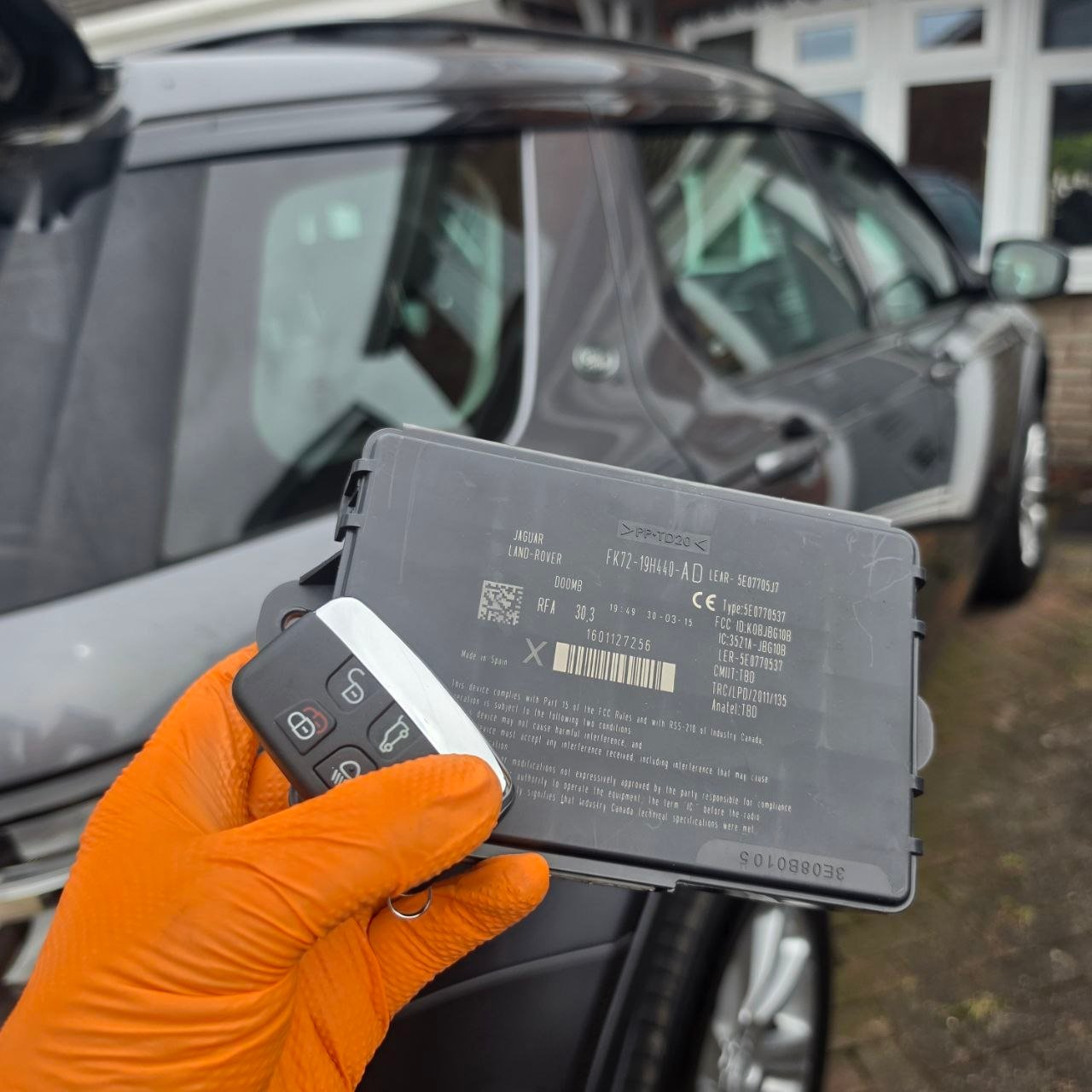
Transponder key programmed on-site — AutoVault Staffordshire
Transponder Technology

Every Major Transponder Chip Family — and Why They Differ

📡
Not all transponder chips are the same. They vary in encryption level (fixed code vs rolling encrypted vs AES), frequency (125kHz for most, UHF for proximity keys), and the programming method required to pair them with a specific vehicle. The chip type determines which tools and procedures Ben uses.
ID11 / ID12

Fixed-Code Glass Chips

The earliest transponder chips — pre-2000 vehicles. Fixed code that never changes. Simple to clone or replace. Found in older Ford, Vauxhall and Peugeot models.

ID33

Fixed-Code Plastic

Used widely on 1990s vehicles. Still fixed-code but housed in the plastic key head rather than a glass capsule. Common on older VW, Audi and Toyota.

ID46

Encrypted (PCF7936)

One of the most common chips on UK roads. Used on vast numbers of Vauxhall, Honda, Citroen, Peugeot, Renault and others. Requires decryption of the immobiliser data before a new chip can be paired.

ID48

Encrypted (Crypto)

Heavy use in Volkswagen Group vehicles — VW, Audi, SEAT, Skoda — and also BMW older platforms. The encryption is more complex than ID46, requiring specialist OBD or EEPROM access.

ID47 / ID70

AES Encrypted

Used on VAG group vehicles post-2012 MQB platform. AES-128 encryption — significantly more complex than older ID48. Requires current-generation programming equipment to handle.

ID4D

Fixed / Encrypted Variants

Toyota, Lexus, Subaru, Suzuki and others. Comes in fixed and encrypted sub-variants (4D-60, 4D-62, 4D-67, 4D-68) depending on the specific platform and year.

ID60 / ID61 / ID63

Texas Instruments DST

Ford PATS system and Lincoln vehicles. Texas Instruments chip family with DST (Digital Signature Transponder) technology. DST-40, DST-80 and 128-bit variants exist.

ID8A

Hitag Pro AES

BMW from approximately 2015 onwards. High-security AES-encrypted chip — paired with the CAS4 and FEM/BDC immobiliser modules. Requires ACDP or equivalent module-level access.

Smart / UHF

Proximity Key Systems

No chip in the traditional sense — the key fob communicates via UHF radio frequency at range. Used on keyless entry and push-button start vehicles across most modern makes.

Which Vehicles Use Which Chips

MakeCommon Chip FamilyProgramming Complexity
FordID60/ID63 — Texas DSTModerate — PATS via OBD
BMW (pre-2015)ID44 / ID46 / ID48Moderate to complex — CAS modules
BMW (post-2015)ID8A — Hitag Pro AESHigh — ACDP module access
MercedesID46 / Crypto variantsHigh — EIS/EZS access
VW / Audi / SEAT / Skoda (pre-2012)ID48 — CryptoModerate — IMMO3/4 via OBD
VW Group (MQB post-2012)ID47/ID70 — AESHigh — MQB platform
Vauxhall / OpelID46 — PCF7936Low to moderate
Toyota / LexusID4D variantsLow to moderate

🔍 Why the Chip Type Matters for Pricing and Timing

Fixed-code chips can often be cloned directly — a fast, straightforward process. Encrypted chips require the immobiliser's data to be read and decrypted before a new chip can be paired, which takes longer and requires more sophisticated equipment. AES-encrypted chips (BMW ID8A, MQB ID47/70) are the most involved — requiring module-level access rather than purely OBD-level communication. Ben will always confirm the chip type and procedure before attending.

Not sure which chip your vehicle uses?

Call with your vehicle registration — Ben will identify the chip type and confirm coverage before attending.

Symptoms & Problems

Six Transponder Key Problems Ben Fixes Regularly

Most have a clear cause and a clean fix — if the right equipment is available.

🚗

Engine Cranks But Will Not Fire

The most recognisable transponder symptom. The starter motor runs, the engine turns over, but it refuses to start. Check your dashboard — an immobiliser warning light (usually a car outline with a key) confirms the chip is not being recognised.

⚠️

Immobiliser Warning Light Stays On

The security light remains illuminated after unlocking the car and inserting the key. This indicates the immobiliser has not received a valid transponder signal — either the chip has failed or the key has not been programmed.

🔄

Works Intermittently

The car starts sometimes but not others with the same key. Often caused by a degrading transponder chip, a cracked key head damaging the chip, or a failing antenna ring around the ignition barrel.

✂️

Key Has Been Cut But Will Not Start

A newly cut key that operates the lock but refuses to start the engine is an unprogrammed transponder. The blade is correct; the chip has never been registered to this vehicle. This is a programming job, not a cutting job.

Wrong Chip Cloned or Programmed

Some key shops attempt to clone a transponder chip using basic equipment. If the wrong chip family is used or the encryption is not handled correctly, the result is a key that either does not start the vehicle at all or causes the immobiliser to permanently lock out all keys.

💧

Chip Damaged by Water or Impact

Transponder chips are small and fragile. A key dropped in water, run through a washing machine, or broken under impact can damage the chip while leaving the blade physically intact. The key still fits the lock but the chip no longer communicates.

The Approach

Diagnose First — Then Programme the Right Chip

The key to a clean transponder job is identifying the exact chip family and encryption level before attempting to programme anything. Using the wrong chip type or the wrong procedure on an encrypted system can cause the immobiliser to flag a security event and lock out all keys — turning a straightforward job into a complex recovery.

Ben connects the diagnostic tool to read the vehicle's immobiliser data before any programming begins. This confirms the chip family, the encryption type, which keys are currently authorised, and the correct programming sequence for that specific platform. Only then is the new transponder introduced to the system.

01

Vehicle & Chip Identification

Registration checked, OBD connection established, immobiliser data read. Chip family and encryption confirmed before any programming attempt.

02

Correct Tool Selected

AUTEL for OBD-level, ACDP for module-level, Xhorse for chip generation. The tool combination depends on the platform — not a single tool fits all.

03

New Transponder Paired

The correct chip is introduced to the immobiliser and registered to the vehicle's ECU. Existing keys remain unaffected unless removal is requested.

04

Full System Test

Lock, ignition and engine start tested before the job is closed. Remote pairing confirmed where applicable. No call-out fee charged on top of the work.

For all-keys-lost scenarios where no existing key is present, the procedure differs — see Lost Car Keys for that specific situation.

Real Job

BMW 3 Series 2018 — All Keys Lost, Longton Stoke

A high-security AES transponder job requiring ACDP module-level access.
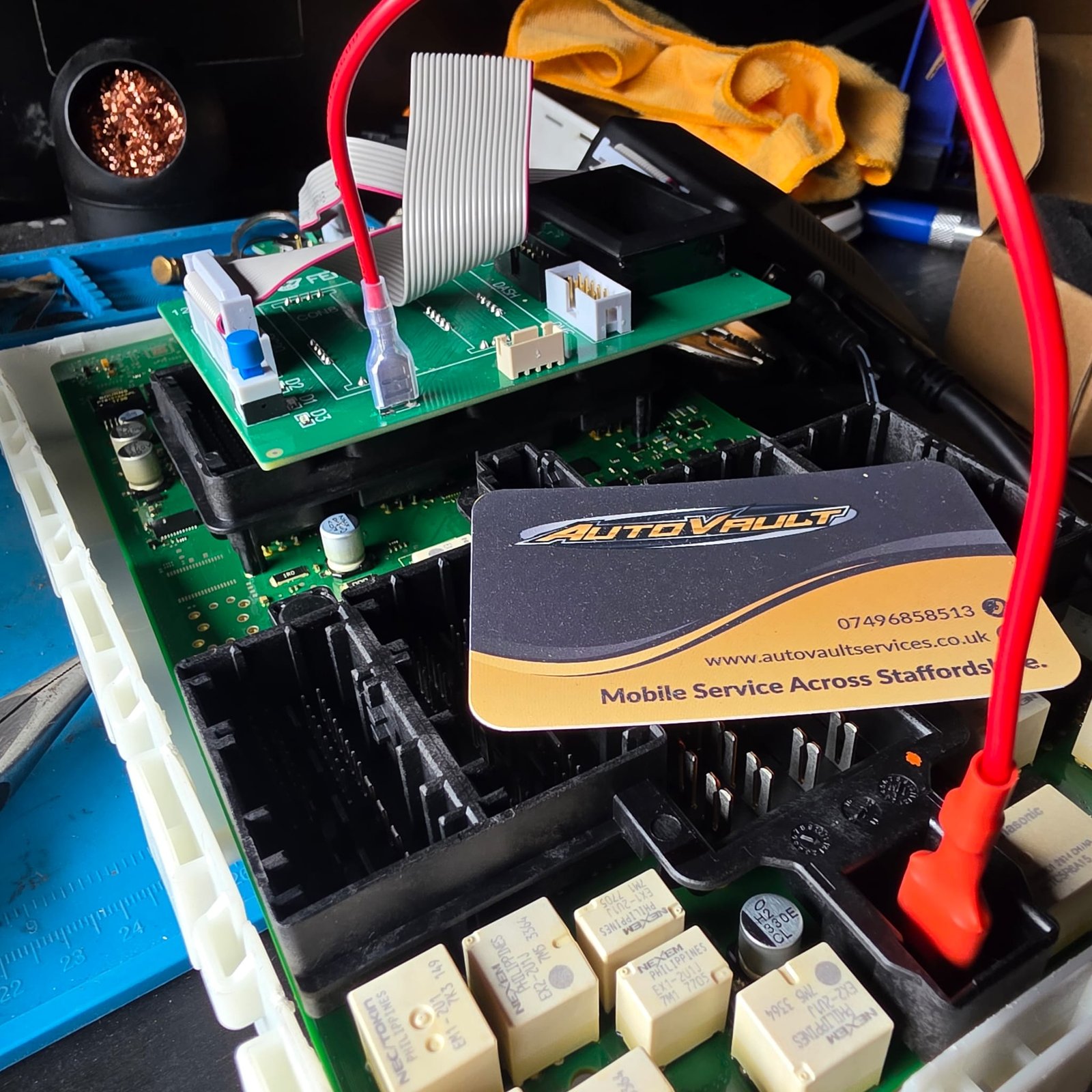
BMW 3 Series 2018 all keys lost transponder programming AutoVault Stoke
Transponder Programming — All Keys Lost

BMW 3 Series 2018

📍 Longton, Stoke-on-Trent  ·  ⏱ Under 1 hour  ·  🔧 ACDP

A customer in Longton had lost all keys to their BMW 3 Series. Post-2015 BMW vehicles use the Hitag Pro AES (ID8A) chip paired with the FEM/BDC module — one of the more complex transponder systems on the market, requiring ACDP module-level access rather than a straightforward OBD connection.

Ben programmed a new key on-site using ACDP, restoring full transponder authorisation with the vehicle running again in under an hour. The customer also received a spare key, ensuring they would not face the same situation again. See BMW coverage and Stoke-on-Trent.


🔧

Equipment for Every Chip Type

AUTEL, ACDP, Xhorse, Zedfull Plus, Truecode and MultiProg — covering fixed-code, encrypted and AES transponder systems across 34+ makes.

🔐

SERMI Registration In Progress

Vehicle security access is increasingly moving toward SERMI standards. Ben's registration is currently in progress.

🏅

Trade Standards

DBS checked, £5M public liability insured. Standards via the Master Locksmiths Association and IGA.

Reputation

What Staffordshire Customers Say

★★★★★
FAQ

Transponder Keys — Frequently Asked Questions

Almost every car key manufactured for a UK vehicle since 1998 contains a transponder chip. If your key has a plastic head that is noticeably thicker than the blade, the chip is almost certainly inside it. The easiest confirmation is to try starting the car with a key that has had the plastic head removed or replaced with a generic cover — if the engine cranks but will not fire, the original chip is missing.
Yes. Chips can degrade over time, especially in keys exposed to heat, moisture, strong magnetic fields or physical shock. The chip may still look intact but fail to transmit reliably — causing intermittent starting or complete non-start.
Cloning copies an existing chip's data onto a new chip — only possible with fixed-code or certain encrypted chips, and only when the original key is present. Programming writes a new identity directly into the vehicle's immobiliser and registers the new chip as an authorised key. Programming is the correct method for encrypted systems and any all-keys-lost situation.
No. The equipment required for encrypted transponder programming — particularly AES systems like BMW ID8A or MQB ID47/70 — is specialist and expensive. A locksmith without the right tools can attempt a job and fail, sometimes causing the immobiliser to lock out all keys. Always confirm equipment coverage before allowing any work to begin.
No. Adding a new transponder to the authorised list does not erase or affect existing keys. They will continue to work as normal. If you want an old or lost key removed from the immobiliser at the same time, Ben can deauthorise it on request.
Yes. Transponder coverage extends to commercial vehicles including Ford Transit, Vauxhall Vivaro, Mercedes Sprinter and other common platforms. See Commercial Auto Locksmith for fleet-specific information.

Transponder Issue? Ben Identifies the Chip and Fixes It On-Site.

Covers all major chip families across Staffordshire. Call with your registration — coverage confirmed before attending, no call-out fee.

Scroll to Top